
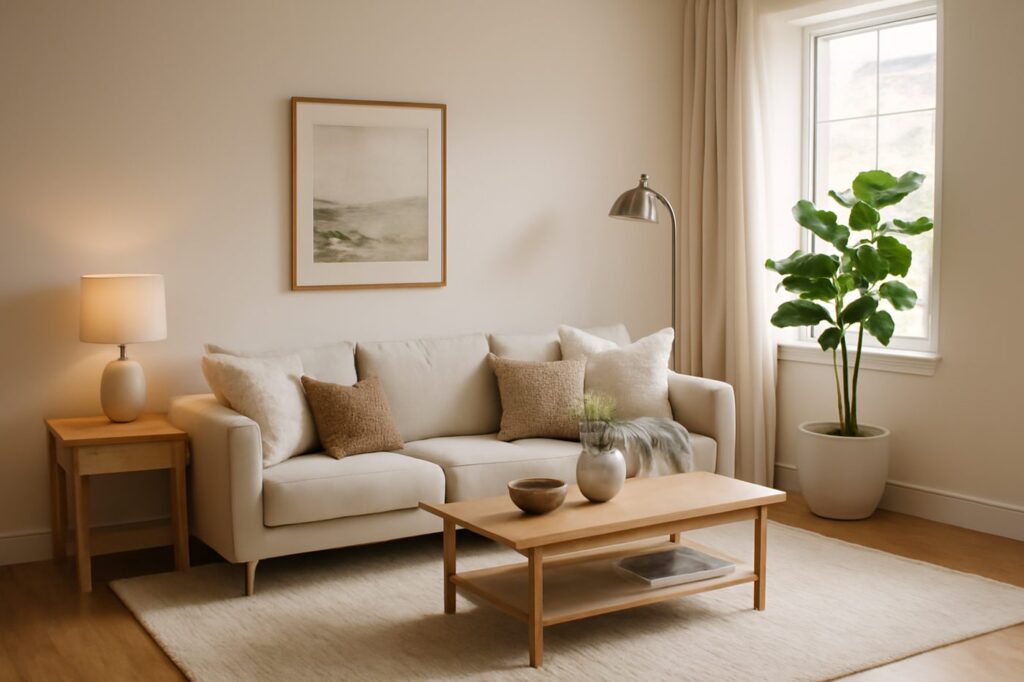
Refreshing a home doesn’t require a gut renovation or designer budget. Small, intentional moves in each room—smart paint choices, better lighting, improved furniture layout, and a few well-chosen textiles—can lift comfort and boost curb and resale appeal. Below are room-by-room tactics that are affordable, practical, and easy to implement over a weekend or two.
Living Room: Anchor, Layer, Illuminate
Paint and trim guidance
Choose a warm neutral for walls to broaden appeal and make spaces feel cohesive. Paint trim a crisp white or a shade lighter/darker than the wall for contrast. Step-by-step:
- Clean surfaces, fill holes with spackle, sand smooth.
- Prime if covering dark color or stains.
- Cut in edges with a quality angled brush, then roll with a 3/8–1/2″ nap roller.
- Paint trim last with semi-gloss for durability; two thin coats beat one thick one.
Lighting upgrades
Swap a dated ceiling fixture for a modern pendant or flush mount. Add layered lighting: overhead, a reading lamp, and accent lights. Tips:
- Use warm LED bulbs (2700–3000K) for living areas.
- Install dimmers for mood control—typical dimmer costs about $15–$60 plus installation.
Safety note: Turn off breakers before switching fixtures; hire a licensed electrician for hardwiring or if unfamiliar with wiring.
Furniture layout rules
Follow these simple steps:
- Measure the room and make a quick floor plan on paper or an app.
- Identify the focal point (TV, fireplace, window) and orient seating toward it.
- Leave 18–24″ for pathways; avoid pushing everything against walls unless the room demands it.
- Anchor seating with a rug large enough for front legs to sit on it.
Kitchen: Small Fixes, Big Impact
Paint, backsplashes, and trim
Walls in kitchens benefit from durable, washable paint (satin or semi-gloss). If full tile replacement isn’t in the budget, consider peel-and-stick backsplash for a fresh look. Update trim and cabinet exteriors with a light coat of paint or fresh hardware.
Hardware and lighting
- Replace cabinet knobs and pulls for a small investment and big visual payoff (typically about $2–$10 per knob or pull).
- Under-cabinet LED strips improve task lighting and cost about $20–$80 to buy and install.
Safety note: For any work near gas ranges or heat sources, ensure appliances are off and cool; consult a professional for gas-line adjustments.
Bedroom: Calm, Comfortable, Practical
Color and trim
Softer, cooler neutrals or muted pastels encourage rest. Paint ceilings one shade lighter than walls to add subtle height. Refinish or paint baseboards for a cleaner look.
Focal pieces and textiles
Invest in a headboard or statement wall behind the bed—this becomes the room’s focal point without a high cost. Layer textiles for comfort:
- Quality sheets (look for higher thread counts or performance blends).
- A coverlet and a textured throw for visual interest.
- Two to four pillows layered by size and texture.
Layout and storage
Keep pathways clear and use under-bed storage to reduce clutter. If space allows, add a small bench or chair to create a reading nook—this reads as upgraded lifestyle for buyers.
Bathroom: Bright, Clean, and Practical
Paint and trim
Use mildew-resistant paint in semi-gloss for moisture-prone areas. Repainting vanity cabinets or swapping hardware modernizes the space cheaply.
Textiles and focal upgrades
Replace shower curtains with a clean, classic option; add a new bath mat and coordinated towels. Consider swapping the mirror for a framed version or adding a medicine cabinet for function and style.
Safety note: For plumbing changes, use a licensed plumber; for electrical work near water (e.g., light fixtures), hire a licensed electrician.
Entry, Hallways, and Lighting: First Impressions Matter
A tidy, well-lit entry hints at a well-maintained home. Quick changes:
- Repaint the front door or replace the handleset for curb appeal.
- Add a runner in hallways scaled to leave 6–12″ of floor visible each side.
- Swap ceiling lights to brighter, energy-efficient LEDs and add motion-sensing fixtures in darker entries for convenience.
Shopping Checklist and Cost Cheat Sheet
Use this checklist for focused buying. Prioritize items that return visual value quickly.
- Paint and primer
- Brushes, rollers, painter’s tape
- New light fixtures, dimmers, warm LED bulbs
- Cabinet hardware, door handles
- Area rugs and throw textiles
- Statement art or mirror
- Plants and simple décor objects
| Project | Typical cost range |
|---|---|
| Interior paint (per room) | $30–$200 for materials; higher if pro labor is added |
| Lighting fixture swap | $25–$300 for fixture; $50–$200 for electrician if hardwired |
| Hardware (per set) | $10–$60 |
| Rug | $50–$600 depending on size and quality |
Quick Staging Tips That Improve Comfort and Resale Appeal
- Declutter and depersonalize—store excess items and family photos.
- Neutralize strong odors and add a subtle, fresh scent (avoid overpowering air fresheners during showings).
- Maximize natural light—open curtains and clean windows before photos or showings.
- Use mirrors opposite windows to boost perceived space and light.
- Create inviting vignettes: a stack of books, a small plant, and a lamp on a side table.
These changes are aimed at comfort and universal appeal; targeted, inexpensive updates often make a home feel well cared for without major investment.
Conclusion
Room-by-room refreshes that focus on paint, lighting, layout, and textiles are among the most cost-effective ways to update a home. Weigh projects by impact and cost: prioritize fixes that improve function and first impressions. With a little planning and these step-by-step moves, a designer-made look is within reach without a full renovation.