
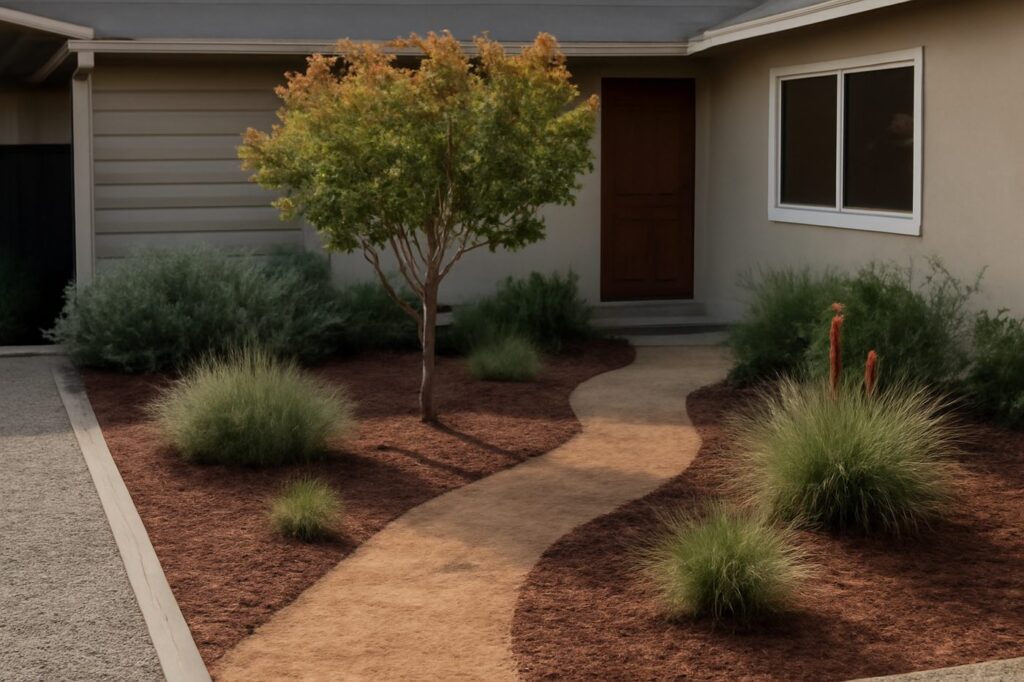
Low-maintenance landscaping delivers lasting curb appeal without constant watering, mowing, or weekend overhaul. With a clear plan, smart plant choices for your climate, simple hardscaping, and basic irrigation, we can create an attractive yard that looks cared-for year-round with minimal effort.
Step-by-step design plan
- Assess the site (1–2 hours). Note sun exposure, slope, soil type, existing trees, and where water pools. Mark property lines and utility locations.
- Set priorities. Decide if you want a low-water landscape, low-labor, wildlife friendly, or a mix. Prioritize curb-facing areas first (walkway, entry, and foundation beds).
- Choose a simple layout. Limit turf to functional areas; use larger planting beds, gravel, and pavers elsewhere. Sketch a basic plan to scale or use grid paper.
- Select plants for your climate. Pick drought-tolerant, disease-resistant species that fit light and soil conditions (see plant lists by zone below).
- Plan hardscape and mulch. Add a clear path, a small focal element, and use mulch to suppress weeds and retain moisture.
- Design irrigation and drainage. Use drip irrigation for beds and a separate system for any remaining lawn; include a rain sensor or smart controller.
- Phase the work. Install hardscape first, then irrigation, then plants and mulch. Stagger plantings across seasons if budget or time is limited.
Plant choices by US climate zone
Choose species adapted to local conditions to minimize water, fertilizer, and pest needs. Below are practical options by broad climate category.
Cold climates (USDA zones 3–6)
- Trees: crabapple, serviceberry, river birch (small-crowned options).
- Shrubs: boxwood, potentilla, dwarf lilac, heather.
- Perennials & grasses: sedums, hostas (shade), Switchgrass, Salvia.
- Groundcovers: creeping thyme, Ajuga (in partial shade).
Transitional/mixed climates (zones 6–8)
- Trees: redbud, eastern red cedar, crape myrtle (in warmer parts).
- Shrubs: hydrangea (mop-head or panicle depending on sun), mountain laurel, evergreen hollies.
- Perennials & grasses: ornamental fountain grass, echinacea, lavender in well-drained spots.
- Groundcovers: pachysandra (shade), native sedges.
Warm/hot and coastal climates (zones 8–11)
- Trees: live oak (small varieties), citrus in frost-free areas, crepe myrtle.
- Shrubs: rosemary (also a low hedge), manzanita, oleander where allowed.
- Perennials & grasses: lantana, agapanthus, muhly grass.
- Groundcovers: dichondra (in mild climates), trailing rosemary.
Arid/desert climates
- Plants: yucca, agave, desert willow, creosote-adapted sages, native bunchgrasses.
- Tips: prioritize gravel and boulders, group plants by water needs, use wide mulch basins around trees.
Hardscaping and mulch strategies
Simple hardscaping reduces maintenance and defines beds.
- Use a defined walkway from the sidewalk to the front door—straight or gently curved for visual interest.
- Choose permeable pavers or decomposed granite to reduce runoff and maintenance compared with poured concrete.
- Edge beds with metal or stone edging to keep mulch in place and make mowing easier.
- Pick a consistent mulch approach: organic mulch in planting beds and gravel in filler zones.
Mulch basics:
- Organic mulches (shredded bark, hardwood) help soil and need refresh every 1–2 years.
- Inorganic mulches (lava rock, pea gravel) last longer but don’t improve soil and can heat up in hot climates.
- Recommended mulch depth: 2–3 inches for organic, 1–2 inches for finer gravels. Keep mulch 2–3 inches away from trunks and siding to prevent moisture problems.
Safety note: confirm grading slopes away from your foundation to avoid water intrusion. For major hardscape work near structures, consult a contractor to confirm there are no structural impacts.
Irrigation and seasonal care
Irrigation setup
- Install drip irrigation for beds and targeted micro-sprays for shrubs; reserve sprinklers for any functional turf areas.
- Use a smart controller or a simple timer with a rain sensor to prevent overwatering and save time.
- Before digging to install irrigation, call 811 or your local utility-locate service to mark buried lines.
Seasonal checklist
- Spring: inspect irrigation for winter damage, prune dead wood, refresh mulch where needed.
- Summer: water deeply and infrequently, monitor for pests, deadhead perennials if desired.
- Fall: cut back perennials as appropriate, reduce irrigation as temperatures drop, service the controller.
- Winter: winterize irrigation valves in freeze-prone areas; protect young trees from rodent damage or sunscald if needed.
Safety note: low-voltage landscape lighting and irrigation controllers involve electricity—use a GFCI outlet and consult a licensed electrician for outdoor wiring work.
Estimated setup and upkeep costs
Costs vary widely by yard size, material quality, and whether labor is hired. Below are typical ranges to help plan.
| Item | Typical setup range | Typical annual upkeep |
|---|---|---|
| Small front yard (1,000 sq ft) | $2,000–$6,000 | $200–$600 |
| Medium front yard (2,500 sq ft) | $5,000–$15,000 | $400–$1,200 |
| Large or high-end hardscape | $15,000–$50,000+ | $800–$3,000+ |
Line-item examples:
- Drip irrigation: typically about $500–$2,000 installed for a modest yard.
- Mulch: typically $30–$60 per cubic yard for organic mulch delivered; labor extra.
- Plants: small shrubs/perennials typically $10–$50 each; trees typically $100–$600 depending on size.
- Labor: professional installation typically accounts for 40–60% of total build cost.
Basic layout template to boost curb appeal with minimal effort
Use a simple, repeatable template to make any front yard look intentional without heavy maintenance.
- Focal point: place a small tree or sculptural shrub off-center near the entry for year-round structure (e.g., ornamental tree, evergreen specimen).
- Path: lay a clear, slightly curved path from sidewalk to front door using permeable pavers or decomposed granite.
- Foundation bed: a continuous 3–6 foot deep bed along the front of the house planted in three layers—low groundcover, medium shrubs, and a few accent perennials.
- Gravel or low groundcover zone: replace large lawn strips with gravel, native grasses, or flowering groundcover to save water and mowing time.
- Containers: use two matching containers by the front door for seasonal color—easier than frequent bed plant changes.
Quick implementation timeline (doable on a weekend and a follow-up day):
- Day 1: Install edging and path material.
- Day 2: Install irrigation lines and test system (or have pro do this).
- Day 3: Plant key trees/shrubs and top with mulch.
Conclusion
Low-maintenance landscaping is about choices: plants adapted to your climate, simple durable materials, water-wise irrigation, and a layout focused on curb-facing areas. With a phased plan and modest upfront investment, we can create a yard that looks intentional and inviting year-round with minimal ongoing work.
Safety reminders: always call utility-locate services before digging and use licensed professionals for structural, gas, or electrical work.